

 Revenue Cycle Management
 04-Aug-2026
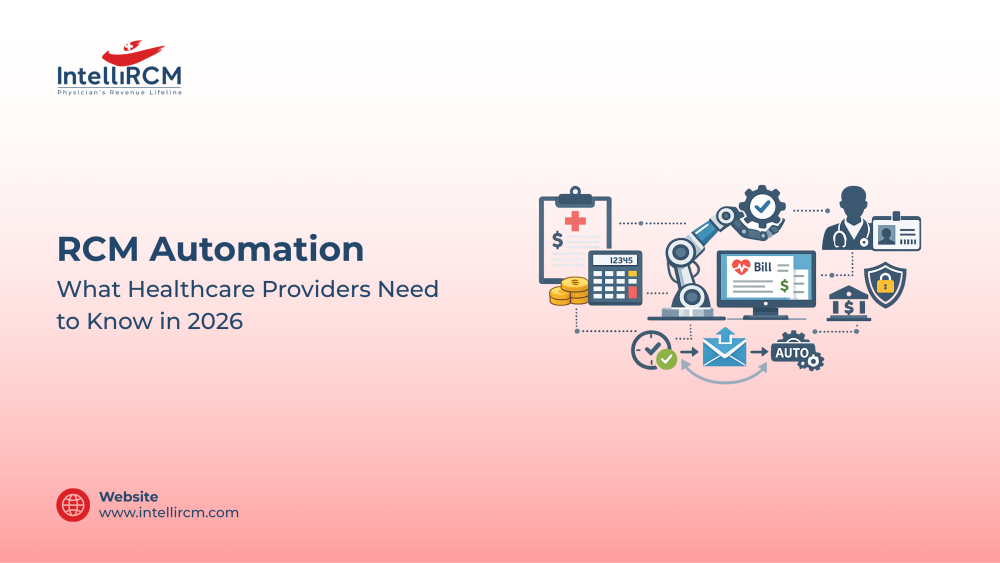
If you work anywhere near billing, coding, or collections in a healthcare organization, you've probably noticed something. AI stopped being a "someday" conversation about two years ago. It's just... here now. Sitting inside your claims software, your eligibility checks, your denial workflows, all of it.
And that's a good thing, mostly. Revenue cycle management, or RCM for short, is the whole process a healthcare organization goes through to get paid for the care it provides. Scheduling, registration, insurance verification, coding, billing, collections, all of it. It's a long chain, and every link matters. AI-powered revenue cycle management services are now touching nearly every one of those links.
But here's the thing nobody really tells you when they're selling you the automation dream: adopting AI and actually getting better results from it are two very different things. I've watched organizations spend a fortune on automation and still end up with the same denial rates they had five years ago. So this piece will walk through what's actually working in 2026, what's just noise, and how to tell the difference. That's the honest version of this conversation, and it's the one worth having.
So what's actually breaking down out there? A few things, and they tend to compound each other.
Denials are the big one. In 2026, roughly 41 percent of providers report a claim denial rate above 10 percent, well past the 5 to 10 percent range that's generally considered healthy (source: MGMA data reported by Fierce Healthcare, 2026). That's not a small gap. When four in ten organizations are running hot on denials, something structural is going on, not just bad luck on individual claims.
Payer rules are also shifting constantly. Prior authorization requirements, coverage policies, coding updates- they all move faster than most RCM teams can keep pace with manually. Add in the fact that documentation now needs to be more detailed than ever to support medical necessity, and you've got a system where a tiny missing detail can turn into a denied claim weeks later.
And then there's the staffing side, which honestly gets less attention than it deserves. RCM teams are stretched thin. Experienced coders and billers are hard to find and harder to keep. So many organizations turned to automation not because it was the perfect solution, but because they no longer had enough people to do the work manually, which is a completely understandable reason. It's just not the same as automation actually solving the underlying problem.
When it's applied well, automation genuinely changes the game. I don't want this piece to come across as anti-AI, because it isn't. Here's where it actually earns its keep.
The repetitive stuff- data entry, eligibility checks, routine claims submission- is exactly what automation is built for. Handing that off frees your staff to deal with the claims that actually need a human brain. It also keeps departments working from the same data instead of five slightly different versions of the truth, which may sound small until you've lived through the alternative.
Automated billing reminders and payment nudges genuinely speed up collections. And when claims get validated for accuracy before they ever go out the door, you catch a lot of the errors that would've come back as denials six weeks later. Fewer denials means less bad debt sitting on the books, plain and simple.
This one doesn't get talked about enough. Patients are more likely to trust a bill they can actually understand. Clear, itemized statements that automation can generate consistently do wonders for patient satisfaction, and honestly, for your collections rate too, since confused patients are slow-paying patients.
Healthcare has a lot of rules. HIPAA, payer-specific requirements, state regulations,-the list keeps growing. Automated systems built with compliance in mind help you stay on the right side of it all while also locking down sensitive patient data as required.
Automation throws off a ton of data. Denial patterns, payer behavior, aging accounts, -all of it becomes visible in a way it never was when everything lived in spreadsheets and institutional memory. Organizations that proactively use that data tend to catch problems months before they'd otherwise notice them.
Here's where things get more complicated, and where I think a lot of the industry conversation is missing something important.
Nearly two-thirds of healthcare providers now use AI at some point in their revenue cycle management process (source: MedEvolve, PRNewswire, Aug 2026). That's a huge number. But most organizations are still measuring success by how much work was done, not whether that work actually resulted in payment. And that gap is where things start to go sideways.
The Touch Tax is basically the hidden cost of all the human and AI-generated work in a revenue cycle that never actually produces a financial outcome. And it's a bigger problem than most people realize. An estimated 65-85% of human touches in the revenue cycle don't produce any financial result (source: MedEvolve, PRNewswire, Aug 2026). Think about that for a second. Most of the effort being spent isn't moving the needle.
Automating that kind of non-actionable work doesn't remove the tax; it just makes it faster and cheaper to produce more of the same. I've seen this play out firsthand with a mid-sized practice that automated their claim status checks. Task completion went way up. Their actual cash collected barely moved. That gap between activity and outcome is the whole story right now.
There's a real-world example worth sitting with here too. A $635 claim that needs six or seven touches before it gets paid, at an estimated $5 to $10 in labor cost per touch, ends up costing the organization a meaningful chunk of that reimbursement just to collect it. Compare that to a clean claim for the same amount, which is paid after a single touch (source: MedEvolve, PRNewswire, Aug 2026). Same revenue. Wildly different cost to collect. That difference is where margin quietly disappears.
A bot can fire off a claim in two seconds flat. But if it missed a modifier, or picked the wrong payer, that claim can bounce back denied weeks later, and now it takes three or four human touches just to fix what the machine got wrong in the first place. The task succeeded. The outcome didn't.
Claim status bots have a similar blind spot. They can check thousands of claims a day, which looks incredibly productive on a dashboard. But if none of those checks actually move a claim closer to getting paid, you've just automated motion, not progress. That distinction matters more than most vendors will tell you.
So what should organizations actually be tracking instead of raw activity? A few things come to mind based on what's working for the organizations I've seen navigate this well: how many touches it takes to resolve a claim, how many of those touches were avoidable, how much workload is being generated by preventable denials, whether payment outcomes are actually improving, and what the total cost to collect looks like across the board. If you're not measuring at least a couple of these, you honestly don't know whether your automation is helping or just staying busy.
The direction this is all heading in isn't "more automation." It's smarter automation paired with people who know what they're doing. That combination is where the real gains are.
Intelligent RCM platforms go beyond just processing transactions. They flag claims that are likely to get denied before they're ever submitted. They prioritize accounts based on how likely they are actually to be recoverable. Some of the more advanced healthcare automation solutions now include contract intelligence too, comparing what you actually got paid against what your contract says you should've gotten, and flagging the gap automatically. Real-time eligibility checks and prior authorization workflows round out the front end, catching errors before they become problems downstream.
Here's my honest take after two decades doing this work: software is fantastic at surfacing problems. It's not always great at solving them. Complex payer disputes, contract interpretation, out-of-network reimbursement fights- these still need someone who's actually negotiated with payers before, not just a system flagging an anomaly. Technology tells you where to look. People are still the ones who get the check.
Task completion isn't the same as getting paid. If you're not sure whether your current setup is closing the gap or quietly widening it, our team can walk through your numbers and show you exactly where the touch tax is costing you.
If you're evaluating a revenue cycle management company right now or considering switching from your current setup, here's what I'd actually ask. Does their platform track outcomes, such as payment results and total cost to collect, or does it just report how many tasks were completed? Do they pair automation with real denial management services and people who can act on what the system finds? And can they show you, with actual numbers, that they've lowered the cost to collect for organizations like yours, not just sped up processing times?
A good healthcare RCM company should be able to answer all three of those without dancing around it. If they can't, that's worth noticing.
This is roughly the approach we've built around at IntelliRCM. Rather than just automating tasks that were already happening, the focus stays on outcomes, reducing the touch tax, lowering total cost to collect, and improving first-pass resolution on claims. Between eligibility checks, medical revenue cycle management, coding accuracy, and patient statement service, the goal is automation that's paired with people who know when to step in. If you're curious whether your current setup is helping or quietly costing you more than it looks like, that's a conversation worth having with someone who can actually walk through the numbers with you.
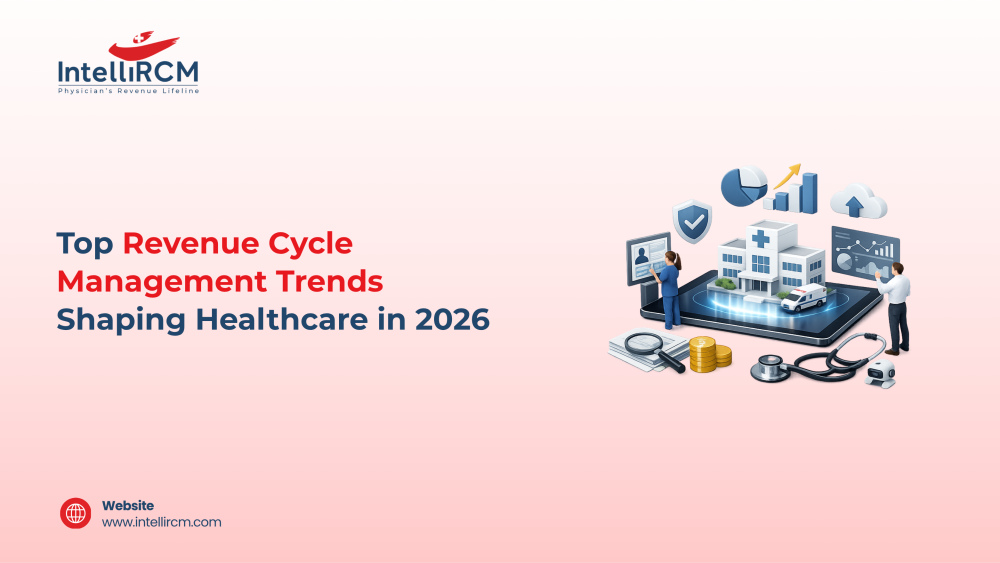
See the top 2026 revenue cycle management trends in AI, cybersecurity, and nearshore outsourcingSchedule a consultation to modernize your RCM billing today.
Read Full GuideAutomation was never going to be a magic fix, and I don't think anyone serious in this industry ever believed it would be. What's becoming clear in 2026 is that the organizations pulling ahead aren't the ones with the most AI tools running. They're the ones asking a harder question of every tool they adopt: is this actually getting us paid, or just keeping everyone busy? That question doesn't have a one-time answer either. It's one you probably need to keep asking about, quarter after quarter, as the tools and the payers keep changing on you.

The CAQH Network plays a vital role in improving the efficiency and accuracy of provider enrollment and credentialing. By leveraging the capabilities of the CAQH Network and integrating it effectively into their RCM processes, healthcare providers can streamline operations, reduce administrative burden, and improve access to care. As the healthcare industry continues to evolve, the CAQH Network will remain an essential tool for navigating the complexities of provider enrollment and credentialing.
Read More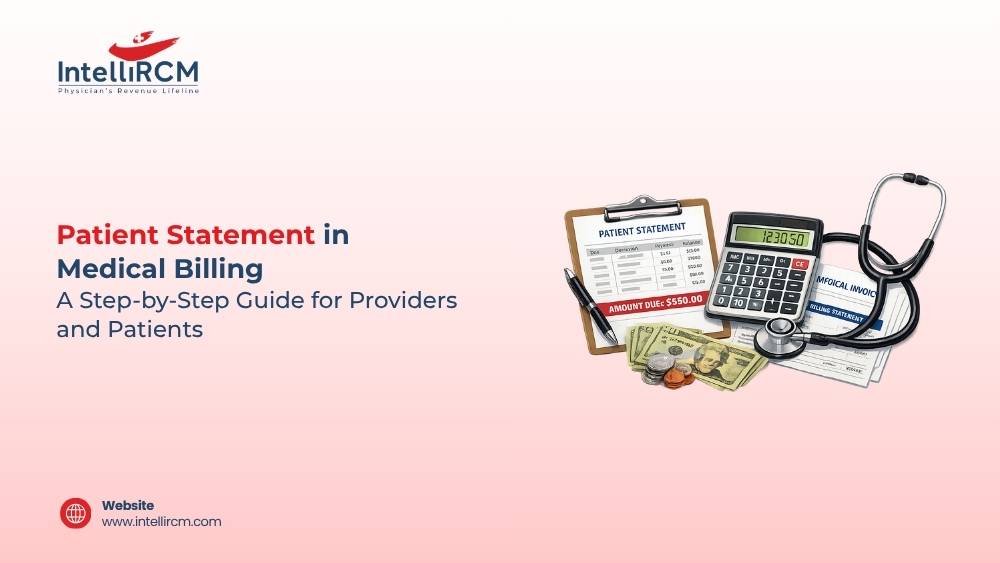
A patient statement in medical billing shows what you owe after insurance. Learn how it works and how IntelliRCM improves your collections today.
Read More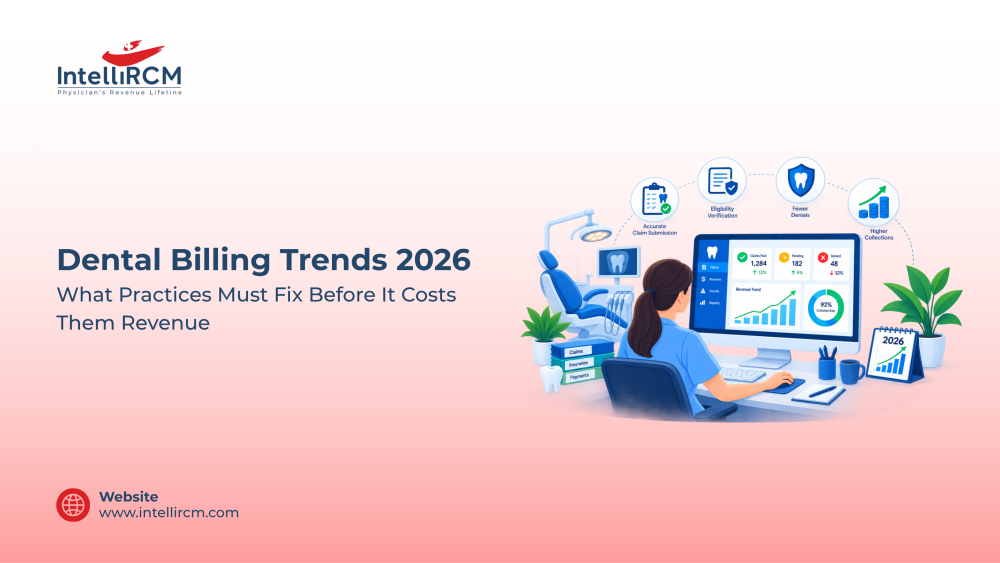
Claim denials are rising fast in 2026. See the billing changes your practice needs to protect revenue, pass audits, and outsource billing to IntelliRCM today.
Read More